
Shedding Possessions
Friday Happynings

The sun has finally returned to the Algarve and the temperature has warmed a bit, although early mornings are still too chilly for me to head out of the house. It was 46F (about 8C, which sounds worse), and with a jacket and the sun, would have been bearable but not fun. If I wait an hour or two, things warm up and I can head out in shirtsleeves.
It’s the type of weather that makes you think about spring cleaning and doing a clear out, but I don’t trust it. Last March we had two weeks of solid rain. We’ve just finished up with that, thank you very much, but now I’m wondering if we’re going to get hit one last time before the truly good weather arrives. Growing up in New England, you learn that the weather will try to trick you at every turn. But at least I can open the sliders and fill the house with fresh air and perhaps alleviate a bit of the damp.
I did two podcast interviews yesterday (one was for a private group, but I’ll let you know when the other comes out) and one of the topics both hosts asked about was getting rid of possessions when you make a big move. How did I determine what to take and what to shed?
I’ve mentioned before that I arrived in Portugal with one big suitcase, one small suitcase (filled mostly with paperwork), my computer bag, and because of a week’s flight delay, a Nantucket bag with the clothes I had bought to keep me for a week. (My luggage went to Chicago when my flight was canceled. It met up with me in Faro, none the worse for wear.)
I grabbed more things on my last trip to the States, over a year ago. I filled up both suitcases (they were fairly empty on the trip over) with things from my storage plus a few new items, but not a lot of clothing. My wardrobe here is different from what I wore in Florida. I’ve changed out my professionally starched shirts for softer tops. I’m in jeans or shorts, so that hasn’t changed. I’ve worn “hard shoes” three times in two years.
When I looked in my closet yesterday for a “nice blouse” to throw on for the interviews (I have “waist-up Zoom dressing” down to a science), I noticed a couple of blouses that I have yet to wear here or maybe I’ve worn once. I have five pairs of jeans—I almost always grab the black pair. I wear the same five or six shirts when I go out. I have a couple of dresses and a couple of suits that sit untouched. It turns out that clothing follows the Pareto Principle, too: We wear 20% of our clothing 80% of the time.
We talked about things with sentimental value. I thought of my dad’s pajama top that I’ve carried with me since he passed in 1976. I have a few clothing items and some jewelry from my mom who passed away in 2012. They’re small, light, foldable. Small items can hold as much sentiment as large.
Possessions are such a strange thing. There are the possessions we use: furniture we sit on, pans we cook with, small appliances, our car. Because we use them, they are replaced at various times as needed. Utilitarian, not sentimental value.
But then there are the possessions we carry with us, from house to house, state to state, country to country. These are the things that “make the cut” each time we need to shed some possessions. The more you move, the less you have to shed, but the more sentimental value each item has. That item has been kept for decades; it has survived the pack or toss debate time and again.
I managed to get 50 years of possessions down to two suitcases and a five by five-foot storage space. I have not needed those items that are in storage for the past five years. My next trip back is going to involve eliminating that storage unit. If it doesn’t fit into my two suitcases, I am saying good-bye.
I’ve tried very hard not to accumulate things here, but of course, they tend to glom onto you, the way a snowball picks up more and more snow on its way downhill. Or, you know, the way fat packs onto your ass after menopause.
I did a book exchange last month in an effort to get rid of the bag of books I have collected and, because I organized it, I ended up carrying five bags of donated books back to my place. I am in book reader heaven and Marie Kondo hell.
How do you decide what to take and what to leave behind?
It depends on what is important to you in your life now.
Some things you don’t have to decide on: Photos, letters, documents can be digitized and put on a thumb drive. No need to split the baby there.
The things you saved from high school may have lost their meaning or gained more meaning. You get to decide.
Grandma’s lamp will need an adapter to plug into an outlet here or maybe you’ll get it rewired. Or maybe just give it to your cousin who always wanted it and carry with you the knowledge that you made someone happy.
Some things may fit in your suitcase but no longer fit in your life.
And sometimes the things we bring with us have no rhyme or reason. We just want to keep them and don’t know why. Maybe they give us some sense of security or grounding. Marie Kondo wouldn’t approve but I do.
I am trying very hard not to accumulate things here. Replacing things means that if something comes in the door, something else has to go out the door.
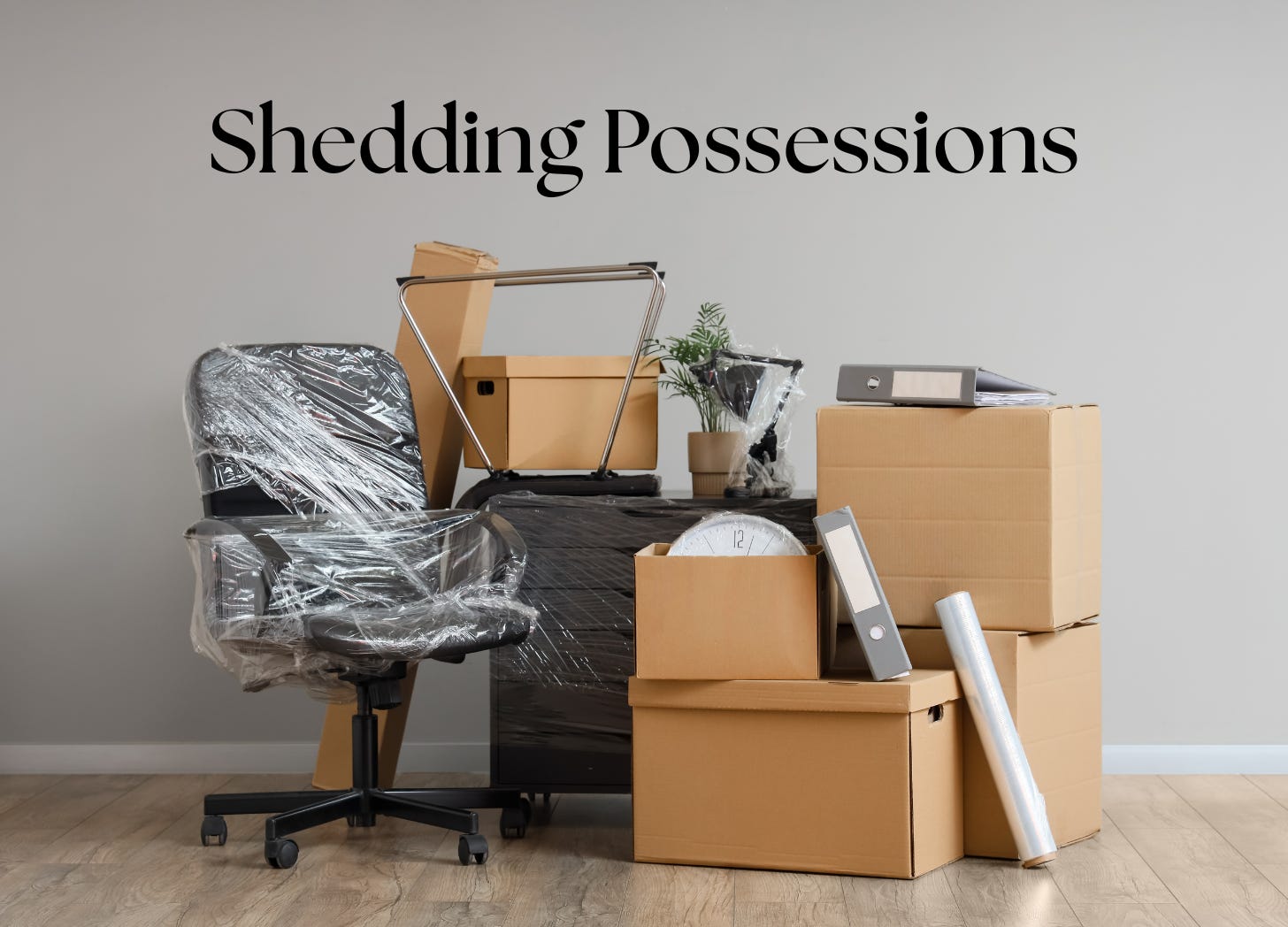
Moving, whether it’s to a new house in the same town or making the jump abroad, necessitates shedding possessions. When I donated and threw away well over half of my stuff, I felt a shift happen. At first, it was hard to part with things. But the more I got rid of, the lighter I felt. And I like that feeling; I felt free, unencumbered, open to new things.
That’s a feeling worth keeping.
"After having three children, Marie Kondo has stated she has "kind of given up" on maintaining a perfectly tidy home, shifting her focus from rigorous organization to enjoying time with her family. She no longer insists on strict, daily folding routines, accepting that a lived-in, sometimes messy home is part of life. "
We’ve lived in Portugal 2 years and have a date with cleaning out our storage bin in Florida in April. it’s become more of an issue because the rental on the storage area just went up by $30 a month. By the way, I enjoyed your reference to the Pareto rule. I’m a statistician and it’s a very useful concept that I’ve taught in courses over the years.